

The Journal of Practical Medicine ›› 2025, Vol. 41 ›› Issue (23): 3676-3683.doi: 10.3969/j.issn.1006-5725.2025.23.007
• Clinical Research • Previous Articles Next Articles
Tingting JIANG1,Rujun ZHENG1,Zheng JI2,Dan WEI3,Qian. CHEN2( )
)
Received:2025-09-11
Online:2025-12-10
Published:2025-12-18
Contact:
Qian. CHEN
E-mail:chen_qian@scu.edu.cn
CLC Number:
Tingting JIANG,Rujun ZHENG,Zheng JI,Dan WEI,Qian. CHEN. End‑of‑life resuscitation decision‑making preferences and their influencing factors among terminally ill patients with malignant tumors[J]. The Journal of Practical Medicine, 2025, 41(23): 3676-3683.
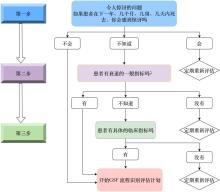
Fig. 1
Process of active identification guide of gold standard framework"
Tab.1
Present situation of terminal cancer patients' decision-making preference"
| 项目 | 分类 | 患者临终决策偏好(n = 485) | |
|---|---|---|---|
| 频数 | 构成比/% | ||
| 管喂营养 | 否 | 218 | 44.9 |
| 是 | 267 | 55.1 | |
| 药物抢救 | 否 | 188 | 38.8 |
| 是 | 297 | 61.2 | |
| 无创呼吸机 | 否 | 231 | 47.6 |
| 是 | 254 | 52.4 | |
| 输血治疗 | 否 | 194 | 40.0 |
| 是 | 291 | 60.0 | |
| 血液透析 | 否 | 338 | 69.7 |
| 是 | 147 | 30.3 | |
| 气管插管 | 否 | 345 | 71.1 |
| 是 | 140 | 28.9 | |
| 心肺复苏 | 否 | 305 | 62.9 |
| 是 | 180 | 37.1 | |
| 电除颤 | 否 | 343 | 70.7 |
| 是 | 142 | 29.3 | |
| 重症监护 | 否 | 343 | 70.7 |
| 是 | 142 | 29.3 | |
| 抢救治疗决策偏好 | 积极抢救 | 191 | 39.4 |
| 维持治疗 | 131 | 27.0 | |
| 放弃抢救 | 163 | 33.6 | |
Tab. 2
The results of univariate analysis of the preference for rescue treatment of patients with terminal malignant tumor"
| 项目 | 例数 | 构成比/% | 积极抢救 | 维持治疗 | 放弃抢救 | χ2/F值 | P值 |
|---|---|---|---|---|---|---|---|
| 年龄 | 30.072 | < 0.001 | |||||
| 18 ~ 35岁 | 29 | 6.0 | 19(65.5) | 4(13.8) | 6(20.7) | ||
| 36 ~ 59岁 | 235 | 48.4 | 109(46.4) | 58(24.7) | 68(28.9) | ||
| 60 ~ 74岁 | 178 | 36.7 | 55(30.9) | 58(32.6) | 65(36.5) | ||
| ≥ 75岁 | 43 | 8.9 | 8(18.6) | 11(25.6) | 24(55.8) | ||
| 性别 | 1.312 | 0.519 | |||||
| 男 | 311 | 64.1 | 127(40.8) | 85(27.3) | 99(31.9) | ||
| 女 | 174 | 35.9 | 64(36.8) | 46(26.4) | 64(36.8) | ||
| 民族 | 0.355 | 0.837 | |||||
| 汉 | 464 | 95.7 | 184(39.7) | 125(26.9) | 155(33.4) | ||
| 其他 | 21 | 4.3 | 7(33.3) | 6(28.6) | 8(38.1) | ||
| 文化程度 | 3.769 | 0.708 | |||||
| 小学及以下 | 128 | 26.4 | 51(39.8) | 32(25.0) | 45(35.2) | ||
| 初中 | 146 | 30.1 | 59(40.4) | 40(27.4) | 47(32.2) | ||
| 高中或中专 | 90 | 18.6 | 29(32.2) | 30(33.3) | 31(34.5) | ||
| 大专及以上 | 121 | 24.9 | 52(43.0) | 29(24.0) | 40(33.0) | ||
| 职业 | 18.299 | 0.006 | |||||
| 农民或工人 | 180 | 37.1 | 82(45.6) | 35(19.4) | 63(35.0) | ||
| 专业技术 | 68 | 14.1 | 27(39.7) | 20(29.4) | 21(30.9) | ||
| 职员 | 70 | 14.4 | 34(48.6) | 16(22.9) | 20(28.5) | ||
| 离退休 | 167 | 34.4 | 48(28.7) | 60(35.9) | 59(35.4) | ||
| 婚姻状况 | 5.122 | 0.077 | |||||
| 有配偶 | 435 | 89.7 | 178(40.9) | 112(25.7) | 145(33.4) | ||
| 无配偶 | 50 | 10.3 | 13(26.0) | 19(38.0) | 18(36.0) | ||
| 主要照顾者 | 9.821 | 0.044 | |||||
| 配偶 | 296 | 61.0 | 115(38.9) | 81(27.4) | 100(33.7) | ||
| 子女 | 151 | 31.1 | 53(35.1) | 46(30.5) | 52(34.4) | ||
| 父母 | 38 | 7.8 | 23(60.5) | 4(10.5) | 11(29.0) | ||
| 宗教信仰 | 0.106 | 0.948 | |||||
| 无 | 463 | 95.5 | 183(39.5) | 125(27.0) | 155(33.5) | ||
| 有 | 22 | 4.5 | 8(36.4) | 6(27.2) | 8(36.4) | ||
| 居住地 | 10.929 | 0.004 | |||||
| 城市 | 268 | 55.3 | 90(33.6) | 86(32.1) | 92(34.3) | ||
| 农村 | 217 | 44.7 | 101(46.5) | 45(20.7) | 71(32.8) | ||
| 家庭人均月收入 | 7.581 | 0.270 | |||||
| < 2 000元 | 85 | 17.5 | 36(42.4) | 20(23.5) | 29(34.1) | ||
| 2 001 ~ 4 000元 | 154 | 31.8 | 71(46.1) | 34(22.1) | 49(31.8) | ||
| 4 001 ~ 7 000元 | 152 | 31.3 | 52(34.2) | 49(32.2) | 51(33.6) | ||
| > 7 001元 | 94 | 19.4 | 32(34.0) | 28(29.8) | 34(36.2) | ||
| 医保支付类型 | 17.805 | 0.007 | |||||
| 全报销 | 23 | 4.7 | 4(17.4) | 10(43.5) | 9(39.1) | ||
| 职工医保 | 141 | 29.1 | 72(51.1) | 36(25.5) | 33(23.4) | ||
| 居民医保 | 308 | 63.5 | 111(36.0) | 82(26.6) | 115(37.4) | ||
| 无医保 | 13 | 2.7 | 4(30.8) | 3(23.1) | 6(46.1) | ||
| 是否携带管道 | 8.092 | 0.017 | |||||
| 是 | 117 | 24.1 | 58(49.6) | 22(18.8) | 37(31.6) | ||
| 否 | 368 | 75.9 | 133(36.1) | 109(29.6) | 126(34.3) | ||
| 目前治疗决策参与情况 | 28.028 | < 0.001 | |||||
| 参与全部 | 115 | 23.7 | 69(60.0) | 17(14.8) | 29(25.2) | ||
| 参与部分 | 281 | 57.9 | 93(33.1) | 88(31.3) | 100(35.6) | ||
| 几乎不参与 | 89 | 18.4 | 29(32.6) | 26(29.2) | 34(38.2) | ||
| 抢救决策经验 | 10.396 | 0.006 | |||||
| 是 | 205 | 42.3 | 66(32.2) | 55(26.8) | 84(41.0) | ||
| 否 | 280 | 57.7 | 125(44.6) | 76(27.1) | 79(28.3) | ||
| 是否见过死亡 | 9.465 | 0.009 | |||||
| 是 | 313 | 64.5 | 108(34.5) | 88(28.1) | 117(37.4) | ||
| 否 | 172 | 35.5 | 83(48.3) | 43(25.0) | 46(26.7) | ||
| 是否与家属讨论病重后措施 | 6.405 | 0.041 | |||||
| 是 | 188 | 38.8 | 66(35.1) | 46(24.5) | 76(40.4) | ||
| 否 | 297 | 61.2 | 125(42.1) | 85(28.6) | 87(29.3) | ||
| 决策时首要考虑因素 | 112.471 | < 0.001 | |||||
| 生存时间 | 159 | 32.8 | 111(69.8) | 37(23.3) | 11(6.9) | ||
| 生活质量 | 262 | 54.0 | 60(22.9) | 83(31.7) | 119(45.4) | ||
| 经济压力 | 64 | 13.2 | 20(31.3) | 11(17.2) | 33(51.5) | ||
| 传统文化信仰(13 ~ 52分) | 485 | 100.0 | 36.70 ± 3.33 | 36.46 ± 4.67 | 34.9 ± 4.82 | 8.847 | < 0.001 |
Tab.3
Description of the assignment of variables related to the preference for rescue treatment in patients with terminal malignant tumor"
| 自变量 | 赋值说明 |
|---|---|
| 年龄 | 以“年龄≥ 75岁”为参照设置哑变量,18 ~ 35岁=(0,1,0,0);36 ~ 59岁=(0,0,1,0);60 ~ 74岁=(0,0,0,1) |
| 职业 | 以“离退休”为参照设置哑变量,农民/工人=(0,1,0,0);专业技术=(0,0,1,0);职员=(0,0,0,1) |
| 婚姻状况 | 0 =有配偶,1 =无配偶 |
| 主要照顾者 | 以“其他亲属”参照设置哑变量,配偶=(0,1,0);子女=(0,0,1) |
| 居住地 | 0 = 城市,1 = 农村 |
| 医保支付类型 | 以“无医保”为参照设置哑变量,职工医保=(0,1,0,0);居民医保=(0,0,1,0);全报销=(0,0,0,1) |
| 是否携带管道 | 0 =是,1 =否 |
| 抢救决策经验 | 0 =是,1 =否 |
| 目前治疗决策参与 | 以“几乎不参与”为参照设置哑变量,参与全部=(0,1,0);参与部分=(0,0,1) |
| 是否见过死亡 | 0 =是,1 =否 |
| 讨论病重后措施 | 0 =是,1 =否 |
| 决策首要考虑因素 | 以“生存时间”为参照设置哑变量,生存质量=(0,1,0);经济压力=(0,0,1) |
| 中国传统文化信仰 | 原值输入 |
Tab. 4
Multi-factor analysis results of patients with terminal malignant tumor's preference for rescue treatment"
| 变量 | 积极抢救vs.放弃抢救 | 维持治疗vs.放弃抢救 | ||||
|---|---|---|---|---|---|---|
| β | P值 | OR值(95%CI) | β | P值 | OR值(95%CI) | |
| 传统文化信仰 | 0.076 | 0.024 | 1.079(1.010 ~ 1.153) | 0.091 | 0.004 | 1.095(1.029 ~ 1.165) |
| 年龄(*≥ 75岁) | ||||||
| 18 ~ 35岁 | 2.344 | 0.006 | 10.427(1.950 ~ 55.749) | 0.899 | 0.344 | 2.457(0.382 ~ 15.798) |
| 36 ~ 59岁 | 1.300 | 0.019 | 3.669(1.237 ~ 10.879) | 1.079 | 0.030 | 2.943(1.107 ~ 7.818) |
| 60 ~ 74岁 | 0.328 | 0.543 | 1.388(0.482 ~ 4.000) | 0.641 | 0.175 | 1.899(0.752 ~ 4.795) |
| 职业(*离退休) | ||||||
| 农民或工人 | -0.226 | 0.594 | 0.798(0.348 ~ 1.829) | -0.740 | 0.063 | 0.477(0.219 ~ 1.040) |
| 专业技术 | -0.427 | 0.368 | 0.653(0.258 ~ 1.654) | -0.258 | 0.555 | 0.773(0.328 ~ 1.818) |
| 职员 | -0.184 | 0.699 | 0.832(0.327 ~ 2.115) | -0.526 | 0.243 | 0.591(0.244 ~ 1.429) |
| 婚姻状况(*无配偶) | ||||||
| 有配偶 | 1.965 | 0.002 | 7.136(2.007 ~ 25.370) | -0.905 | 0.074 | 0.404(0.150 ~ 1.091) |
| 主要照顾者(*其他亲属) | ||||||
| 配偶 | -1.334 | 0.043 | 0.263(0.072 ~ 0.961) | 0.982 | 0.230 | 2.670(0.537 ~ 13.292) |
| 子女 | -0.586 | 0.375 | 0.557(0.153 ~ 2.029) | 1.247 | 0.117 | 3.481(0.731 ~ 16.578) |
| 居住地(*农村) | ||||||
| 城市 | -0.146 | 0.639 | 0.864(0.469 ~ 1.592) | 0.103 | 0.741 | 1.108(0.603 ~ 2.037) |
| 医保类型(*无医保) | ||||||
| 职工医保 | 1.748 | 0.034 | 5.745(1.137 ~ 29.048) | 1.170 | 0.166 | 3.222(0.616 ~ 16.843) |
| 居民医保 | 0.352 | 0.662 | 1.421(0.294 ~ 6.883) | 0.564 | 0.491 | 1.758(0.353 ~ 8.764) |
| 全报销 | -1.285 | 0.241 | 0.277(0.032 ~ 2.372) | 0.858 | 0.376 | 2.358(0.353 ~ 15.905) |
| 带管(*否) | ||||||
| 是 | 0.710 | 0.025 | 2.033(1.091 ~ 3.787) | -0.411 | 0.212 | 0.664(0.349 ~ 1.263) |
| 参与决策(*几乎不参与) | ||||||
| 参与全部 | 0.801 | 0.065 | 2.228(0.951 ~ 5.217) | -0.374 | 0.406 | 0.688(0.284 ~ 1.664) |
| 参与部分 | 0.227 | 0.533 | 1.255(0.614 ~ 2.564) | 0.254 | 0.448 | 1.289(0.669 ~ 2.481) |
| 抢救决策经验(*否) | ||||||
| 是 | -0.142 | 0.653 | 0.867(0.467 ~ 1.612) | -0.352 | 0.239 | 0.703(0.391 ~ 1.264) |
| 是否见过死亡(*否) | ||||||
| 是 | -0.306 | 0.341 | 0.736(0.392 ~ 1.383) | 0.041 | 0.897 | 1.042(0.560 ~ 1.940) |
| 是否讨论病重医疗措施(*否) | ||||||
| 是 | -0.062 | 0.836 | 0.939(0.519 ~ 1.700) | -0.362 | 0.202 | 0.696(0.399 ~ 1.214) |
| 首先考虑(*生存时间) | ||||||
| 生活质量 | -3.229 | < 0.001 | 0.040(0.018 ~ 0.087) | -1.414 | < 0.001 | 0.243(0.111 ~ 0.533) |
| 经济压力 | -2.887 | < 0.001 | 0.056(0.022 ~ 0.143) | -2.195 | < 0.001 | 0.111(0.040 ~ 0.312) |
| [1] |
郑荣寿, 陈茹, 韩冰峰, 等. 2022年中国恶性肿瘤流行情况分析[J]. 中华肿瘤杂志, 2024, 46(3): 221-231. doi:10.3760/cma.j.cn112152-20240119-00035
doi: 10.3760/cma.j.cn112152-20240119-00035 |
| [2] |
BRAY F, LAVERSANNE M, SUNG H, et al. Global cancer statistics 2022: GLOBOCAN estimates of incidence and mortality worldwide for 36 cancers in 185 countries[J]. CA Cancer J Clin, 2024, 74(3): 229-263. doi:10.3322/caac.21834
doi: 10.3322/caac.21834 |
| [3] | 滕熠, 张晓丹, 夏昌发, 等. 中国与全球癌症发病、死亡和患病对比及其预测分析:GLOBOCAN 2022数据解读[J]. 中华肿瘤防治杂志, 2024, 31(23): 1413-1420. |
| [4] |
IGLESIAS-SANTAMARÍA A. Evaluating aggressiveness of end-of-life care in patients with advanced cancer: A retrospective single-center analysis[J]. J Oncol Pharm Pract, 2022.doi: 10.1177/10781552221117751 .
doi: 10.1177/10781552221117751 |
| [5] |
COSTA M F F D, BILOBRAN M A, DE OLIVEIRA L C, et al. Correlation between cancer pain and quality of life in patients with advanced cancer admitted to a palliative care unit[J]. Am J Hosp Palliat Care, 2024, 41(8): 882-888. doi:10.1177/10499091231195318
doi: 10.1177/10499091231195318 |
| [6] | 佟丹阳, 王晨霞, 白雪红, 等. 癌症患者自我报告的症状负担及影响因素分析[J]. 西部中医药, 2024, 37(5): 79-85. |
| [7] |
WANG Y, ZHANG J, HU B, et al. Influencing factors of lung cancer patients’participation in shared decision-making: A cross-sectional study[J]. J Cancer Res Clin Oncol, 2022, 148(12): 3303-3312. doi:10.1007/s00432-022-04105-y
doi: 10.1007/s00432-022-04105-y |
| [8] |
KIM S, KOH S, PARK K, et al. End-of-life care decisions using a Korean advance directive among cancer patient-caregiver dyads [J]. Palliat Support Care, 2017, 15(1): 77-87. doi:10.1017/s1478951516000808
doi: 10.1017/s1478951516000808 |
| [9] | The Gold Standards Framework. Welcome to gold standards framework [EB/OL]. (2025-05-02)[2025-06-06]. . |
| [10] | 张娟. 晚期癌症患者预立医疗照护计划准备度及影响因素的研究[D]. 合肥: 安徽医科大学, 2021. |
| [11] | HSIUNG Y F Y. Chinese Americans’ Readiness for Advance Care Planning[D]. Chicago: University of Illinois at Chicago, 2012. |
| [12] |
LIAO J, WU B, MAO J, et al. Preference for aggressive end-of-life care among advanced cancer patients in wuhan, china: A cross-sectional study[J]. Int J Environ Res Public Health, 2020, 17(18): 6592. doi:10.3390/ijerph17186592
doi: 10.3390/ijerph17186592 |
| [13] |
OHR S, JEONG S, SAUL P. Cultural and religious beliefs and values, and their impact on preferences for end-of-life care among four ethnic groups of community-dwelling older persons[J]. J Clin Nurs, 2017, 26(11/12): 1681-1689. doi:10.1111/jocn.13572
doi: 10.1111/jocn.13572 |
| [14] |
CHEN Y, YAO L, CHEN Q, et al. A retrospective study on the impact of radiotherapy on the survival outcomes of small cell lung cancer patients based on the SEER database[J]. Sci Rep, 2024, 14(1): 15552. doi:10.1038/s41598-024-65314-8
doi: 10.1038/s41598-024-65314-8 |
| [15] |
DIAO Y H, SHU X P, TAN C, et al. Preoperative albumin-bilirubin score predicts short-term outcomes and long-term prognosis in colorectal cancer patients undergoing radical surgery[J]. World J Gastrointest Surg, 2024, 16(7): 2096-2105. doi:10.4240/wjgs.v16.i7.2096
doi: 10.4240/wjgs.v16.i7.2096 |
| [16] |
LIAO J, WU B, MAO J, et al. Factors associated with patient-caregiver concordance about life-sustaining treatment preferences among advanced cancer patients: A cross-sectional study[J]. Semin Oncol Nurs, 2024, 40(5): 151697. doi:10.1016/j.soncn.2024.151697
doi: 10.1016/j.soncn.2024.151697 |
| [17] |
BACORRO W, CAIRO C, BALDIVIA K, et al. The case for shared decision-making in oncology and why the philippine healthcare system is primed for it[J]. Asia Pac J Clin Oncol, 2025, 21(3): 243-246. doi:10.1111/ajco.14143
doi: 10.1111/ajco.14143 |
| [18] |
XU S, WENG G, CHEN X, et al. Stress responses, social support and death care experience among spouse caregivers of young and middle-aged patients with terminal cancer: A mixed-methods analysis[J]. Front Oncol, 2024, 14: 1464132. doi:10.3389/fonc.2024.1464132
doi: 10.3389/fonc.2024.1464132 |
| [19] |
LEE J H, LEE Y J, PARK S J, et al. Patient acceptance of death and symptom control/quality of care among terminal cancer patients under inpatient hospice care: A multicenter cross-sectional study[J]. Am J Hosp Palliat Care, 2025, 31: 10499091251318738. doi:10.1177/10499091251318738
doi: 10.1177/10499091251318738 |
| [20] |
KWON Y, HU X, SHI K S, et al. Contemporary patterns of end-of-life care among medicare beneficiaries with advanced cancer[J]. JAMA Health Forum, 2025, 6(2): e245436. doi:10.1001/jamahealthforum.2024.5436
doi: 10.1001/jamahealthforum.2024.5436 |
| [21] |
CHEN X, WANG Z, ZHOU J, et al. A scoping literature review of factors influencing cancer patients’self-perceived burden[J]. Eur J Oncol Nurs, 2024, 68: 102462. doi:10.1016/j.ejon.2023.102462
doi: 10.1016/j.ejon.2023.102462 |
| [22] |
LIU X L, LI L L. Survey on hospice care attitude of family members of advanced cancer patients at different ages[J]. World J Clin Cases, 2024, 12(21): 4626-4631. doi:10.12998/wjcc.v12.i21.4626
doi: 10.12998/wjcc.v12.i21.4626 |
| [23] |
MUKMININ M A, YEH T H, LIN H C, et al. Global prevalence and risk factors of delirium among patients following acute stroke: A systematic review and meta-analysis[J]. J Stroke Cerebrovasc Dis, 2025, 34(2): 108221. doi:10.1016/j.jstrokecerebrovasdis.2024.108221
doi: 10.1016/j.jstrokecerebrovasdis.2024.108221 |
| [24] |
XU B, SHAO Y F, XI H L, et al. Time preference shifts in medical decision-making after serious illness[J]. Soc Sci Med, 2024, 360: 117321. doi:10.1016/j.socscimed.2024.117321
doi: 10.1016/j.socscimed.2024.117321 |
| [25] |
MAHESHWARI S, ARIAS M, UBERSAX C, et al. Understanding health outcome preferences of older adults diagnosed with multiple myeloma[J]. J Geriatr Oncol, 2024, 15(5): 101781. doi:10.1016/j.jgo.2024.101781
doi: 10.1016/j.jgo.2024.101781 |
| [26] |
SU M, YAO N, LIU L, et al. Older cancer survivors living with financial hardship in China: A qualitative study of family perspectives[J]. Psychooncology, 2022, 31(4): 661-670. doi:10.1002/pon.5854
doi: 10.1002/pon.5854 |
| [27] | 王瑞瑞,谢李,王基栋.毛兰素对口腔鳞状细胞癌细胞增殖和凋亡的影响及机制[J].口腔疾病防治,2025,33(03):186-194. |
| [28] | 张慧,高慧,谢友翔,等.细胞力学与细胞外基质力学在肿瘤治疗中的研究进展[J].口腔疾病防治,2025,33(10):896-907. |
| [29] | 纪光伟, 周明飞, 周雨欣, 等. 国内外安宁疗护发展模式的研究与评价[J]. 实用医学杂志, 2024, 40(7): 877-886. |
| [1] | Li WEI,Ziyi LIN,Zhen CHEN,Hejing SUN,Min DONG. Risk stratification value of TyG-BMI for immune-related adverse events in cancer patients treated with immune checkpoint inhibitors [J]. The Journal of Practical Medicine, 2026, 42(1): 12-20. |
| [2] | Guoliang WEN,Hang FANG,Wei. ZHANG. Value of conventional radiological features and ct radiomics features in differentiating parotid adenolymphoma from malignant tumors [J]. The Journal of Practical Medicine, 2025, 41(21): 3442-3448. |
| [3] | Minghong SHI,Zhanwei LIU,Yang ZHU,Lili XIA,Gang CHENG,Youguo LU. Influence of oxycodone-acetaminophen combined with local radiotherapy on serum cytokines in elderly patients with malignant tumor bone metastasis complicated with cancer pain [J]. The Journal of Practical Medicine, 2025, 41(11): 1718-1723. |
| [4] |
TIAN Tian, JING Hui, FU Jia..
Nomogram prediction model of delirium risk in patients with malignant tumors [J]. The Journal of Practical Medicine, 2021, 37(20): 2641-2646. |
| Viewed | ||||||
|
Full text |
|
|||||
|
Abstract |
|
|||||
