实用医学杂志 ›› 2025, Vol. 41 ›› Issue (22): 3544-3551.doi: 10.3969/j.issn.1006-5725.2025.22.011

• 临床研究 • 上一篇    

倾向性评分匹配评估全内镜下不同手术入路治疗退行性腰椎侧隐窝狭窄症的疗效

刘然1,陈丹2,齐颖钊1,王佳钰1,刘志新1()   

  1. 1.秦皇岛市第一医院,骨科,(河北 秦皇岛 066000 )
    2.秦皇岛市第一医院,输血科,(河北 秦皇岛 066000 )
  • 收稿日期:2025-07-22 出版日期:2025-11-25 发布日期:2025-11-26
  • 通讯作者: 刘志新 E-mail:15803351940@163.com
  • 基金资助:
    中央引导地方科技发展资金项目(246Z2001G);秦皇岛市科技计划项目(202101A144)

The efficacy of different surgical approaches in full⁃endoscopic treatment for degenerative lumbar lateral recess stenosis: A propensity score⁃matched cohort study

Ran LIU1,Dan CHEN2,Yingzhao QI1,Jiayu WANG1,Zhixin LIU1()   

  1. *.Department of Orthopedics,Qinhuangdao First Hospital,Qinhuangdao 066000,Hebei,China
  • Received:2025-07-22 Online:2025-11-25 Published:2025-11-26
  • Contact: Zhixin LIU E-mail:15803351940@163.com

摘要:

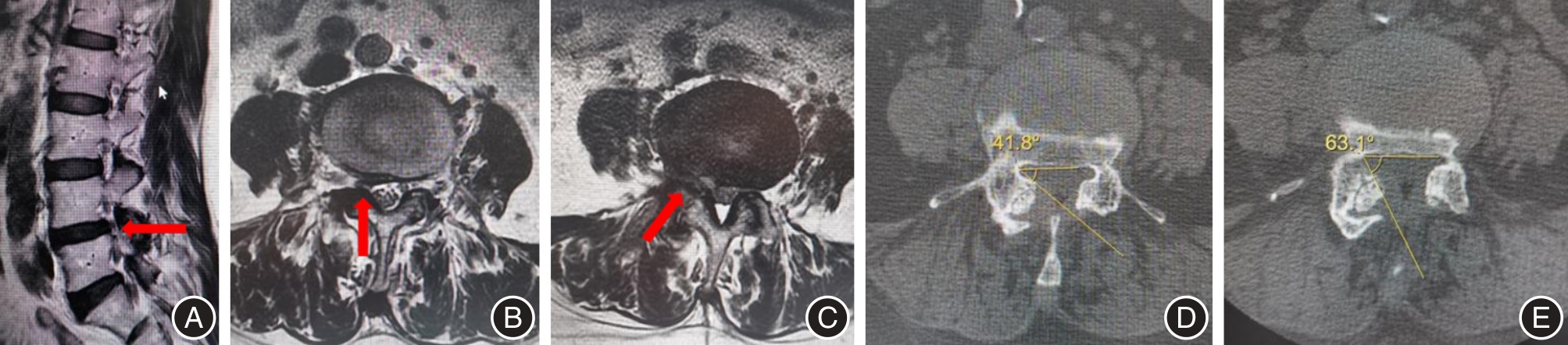
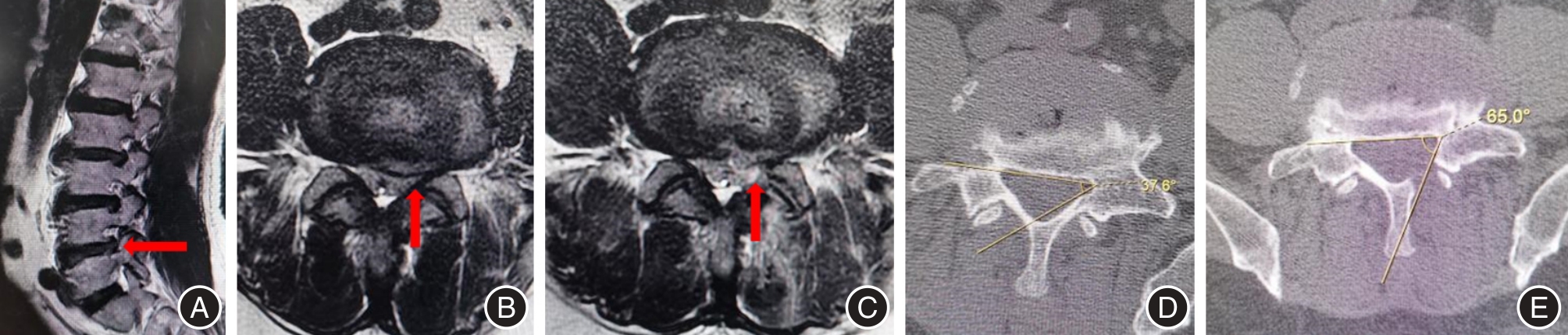
目的 比较经椎间孔入路(transforaminal endoscopic lumbar discectomy, TELD)与经椎板间入路(interlaminar endoscopic lumbar discectomy, IELD)单通道脊柱内镜下腰椎间盘切除术治疗腰4—腰5节段(L4L5)退行性腰椎侧隐窝狭窄症(degenerative lumbar lateral recess stenosis, DLLRS)的临床疗效。 方法 回顾性分析2020年3月至2024年3月秦皇岛市第一医院收治的78例行单通道脊柱内镜手术的L4L5 DLLRS患者,其中TELD组(侧路组)34例,IELD组(后路组)44例。采用倾向性评分匹配法(propensity score matching, PSM)以年龄、性别、BMI、病程为协变量进行1∶1匹配,最终每组各25例纳入研究。比较两组围手术期指标;评估术前、术后3 d、3个月、6个月、1年腰腿痛视觉疼痛模拟评分(visual analog scale, VAS)及Oswestry功能障碍指数(oswestry disability index, ODI);术后3 d复查腰椎CT测量侧隐窝角(lateral recess angle, LRA),评估减压情况;术后3个月行腰椎动力位X线片评估稳定性;术后1年采用改良MacNab标准评价疗效。 结果 两组术后各时间点腰腿痛VAS评分及ODI指数均较术前显著降低(P < 0.05),但组间差异无统计学意义(P > 0.05);术后3 d腰椎CT显示LRA均较术前显著增加(P < 0.05),后路组增幅较大,但组间差异无统计学意义(P > 0.05);术后3个月腰椎动力位X线片显示,两组腰椎稳定性与术前相比均无变化,组间差异无统计学意义(P > 0.05);术后1年改良MacNab标准评定,侧路组优良率88.0%,后路组优良率为92.0%,组间差异无统计学意义(P > 0.05)。 结论 TELD与IELD两种术式治疗L4L5 DLLRS均安全有效,临床疗效相当。手术方式的选择应依据突出物的位置、关节突增生及压迫情况综合判断。

关键词: 退行性腰椎侧隐窝狭窄症, 单通道脊柱内镜, 椎间孔入路腰椎椎间盘切除术, 椎板间入路腰椎间盘切除术

Abstract:

Objective To compare the clinical efficacy of the transforaminal endoscopic lumbar discectomy (TELD) approach with that of the interlaminar endoscopic lumbar discectomy (IELD) approach, both performed using a single-channel spinal endoscope, in the treatment of L4-L5 degenerative lumbar lateral recess stenosis (DLLRS). Methods A retrospective analysis was conducted on 78 patients with L4-L5 DLLRS who underwent single-channel endoscopic spinal surgery at our institution between March 2020 and March 2024. Patients were classified into the TELD group (lateral transforaminal approach, n = 34) and the IELD group (interlaminar approach, n = 44). Propensity score matching (PSM) was performed in a 1∶1 ratio using age, sex, body mass index (BMI), and duration of symptoms as covariates, yielding 25 matched pairs for final comparative analysis. Perioperative outcomes were systematically compared between groups. Visual analog scale (VAS) scores for low back pain and leg pain, as well as the Oswestry Disability Index (ODI), were evaluated preoperatively and at 3 days, 3 months, 6 months, and 1 year postoperatively. Lumbar computed tomography (CT) scans obtained 3 days after surgery were used to measure the lateral recess angle (LRA) and assess the extent of decompression. Spinal stability was evaluated using dynamic lumbar radiographs at 3 months postoperatively. Clinical outcomes were assessed 1 year after surgery based on the modified MacNab criteria. Results Both groups showed significant reductions in VAS scores for low back and leg pain, as well as in ODI scores, at all postoperative time points compared to baseline values (P < 0.05). However, no statistically significant differences were observed between the two groups (P > 0.05). Lumbar CT scans performed on postoperative day 3 demonstrated a significant increase in LRA in both groups relative to preoperative measurements (P < 0.05). Although the magnitude of increase was greater in the IELD group, the intergroup difference did not reach statistical significance (P > 0.05). At 3 months postoperatively, dynamic lumbar radiographs revealed no deterioration in spinal stability in either group compared to preoperative conditions, with no significant difference between groups (P > 0.05). According to the modified MacNab criteria at 1 year postoperatively, the excellent and good outcome rate was 88.0% in the TELD group and 92.0% in the IELD group, with no statistically significant difference between the groups (P > 0.05). Conclusions Both the TELD and IELD techniques are safe and effective for managing L4-L5 DLLRS, yielding comparable clinical outcomes. The selection of surgical approach should be guided by the anatomical location of ventral disc protrusions, as well as the degree of facet joint hypertrophy and neural compression.

Key words: lumbar spinal lateral recess stenosis, full-endoscopic, transforaminal endoscopic lumbar discectomy, interlaminar endoscopic lumbar discectomy

中图分类号: